
Field notes · September 2026
There is a problem with the accessibility requirement in business licensing. Here is how we are solving it.
For twenty years we did the surveys by hand — walked the premises, filled out the forms, argued the edge cases with the licensing office. We knew every question by heart. What we could not scale was the answer.
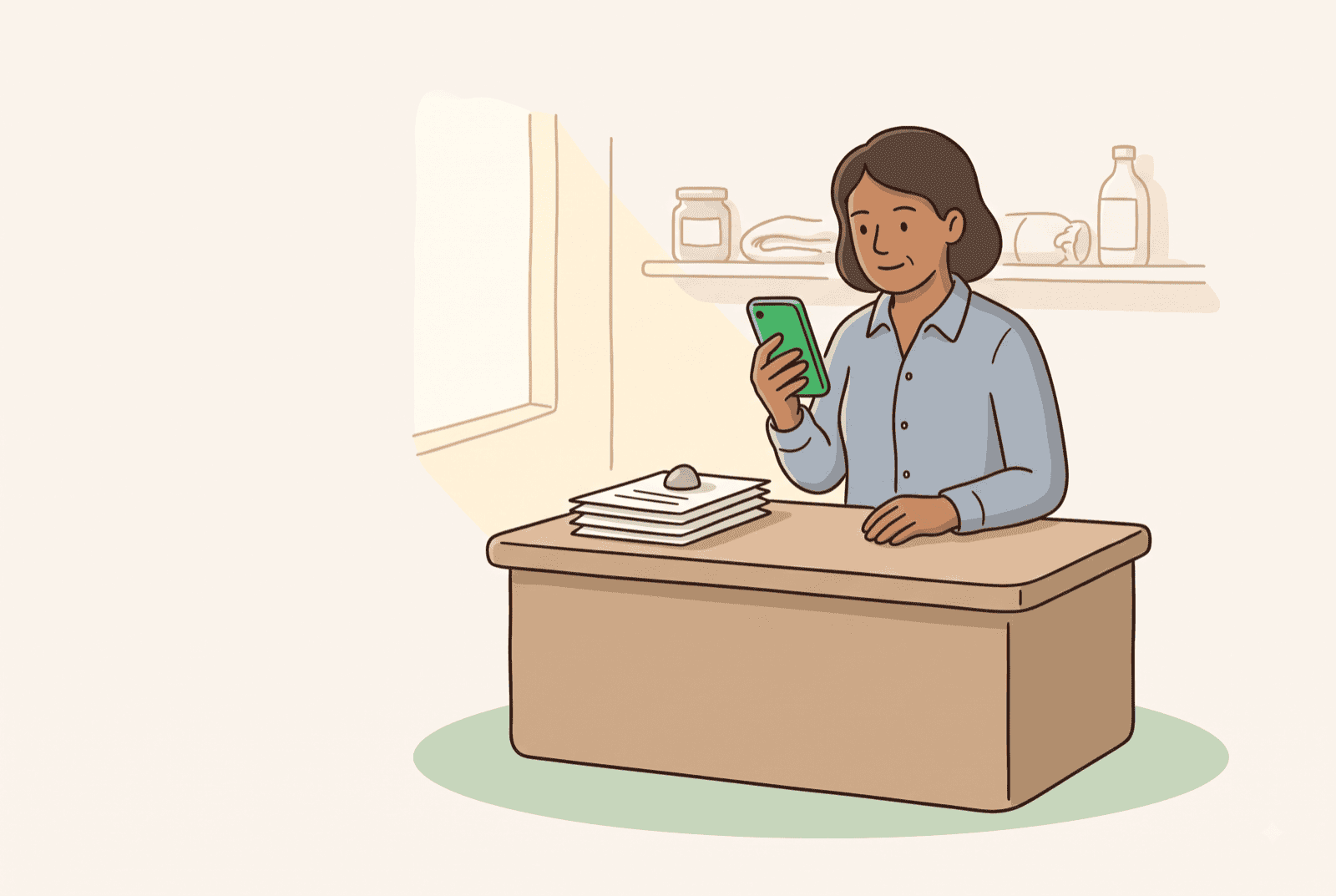
The bottleneck
A small-business owner renewing a license has to file an accessibility declaration. Most owners have not read the regulations — nobody would expect them to — and do not know what the form is really asking. So they hire a consultant. The cheap ones do a superficial audit and sign whatever the owner puts in front of them, leaving the business exposed to a lawsuit the first time an inspector or a customer looks closely. The professional ones do the work properly, but often at a price that is disproportionate to a small business's actual risk profile. Either way the owner has paid for something they did not have the tools to evaluate.
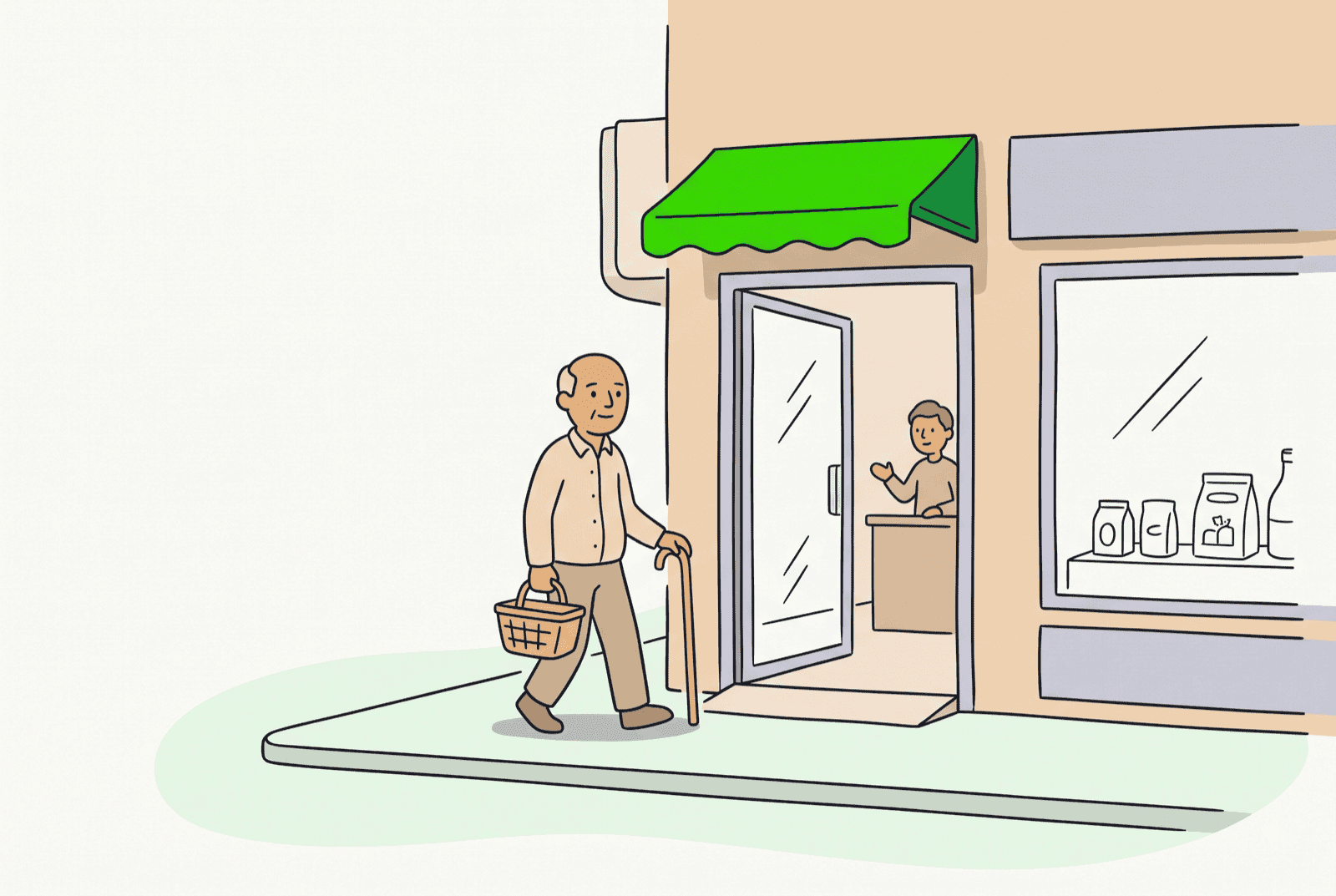
The licensing office on the other side of the counter cannot trust the declarations it receives. Different templates, different depth, different signatures — sometimes from a consultant the office has never heard of. The rational response is to not take the paperwork at face value, which means the authority ends up running its own accessibility check on top. Public money spent verifying a document that was supposed to save them the trouble.
This is not a problem of any particular jurisdiction in any interesting sense. It is the shape of every compliance regime where a professional bottleneck sits between a small business and a bureaucracy that cannot itself scale trust. The specifics vary; the pattern is universal.
22 years
of watching the same pattern
Every year, thousands of businesses in the market we serve renew a license, and each one requires an accessibility declaration. The demand is roughly constant. The number of certified consultants is not. At some point the honest answer stops being 'add more consultants' and becomes 'redesign the form.' That was the meeting where we decided to build the app.
There is no villain here
The business owner wants their premises to be accessible. They just do not know the regulations well enough to evaluate what the form is asking, or to tell whether the consultant they hired did the work properly. The consultant is doing what the regulation was designed to ask of them. The authority wants accessible businesses too — they are just not equipped to trust declarations arriving at their counter in a dozen different formats. Even the government saw the mismatch: an affidavit-based path exists specifically to let an owner file without the full consultant flow, but the tooling around it — the questions, the guidance, the delivery format — never got built well enough for anyone to lean on.
So we picked up the glove. Not to replace anyone. To build the tooling the affidavit path was always waiting for — well enough that everyone can lean on it.
The redesign
The app is the form, refactored. It asks only what the regulation actually requires. It knows which questions apply to which class of business, so nobody answers questions that do not apply to them. It takes photographs as evidence where a text answer would be ambiguous. And it produces documents in the exact format the receiving clerk already knows how to read.
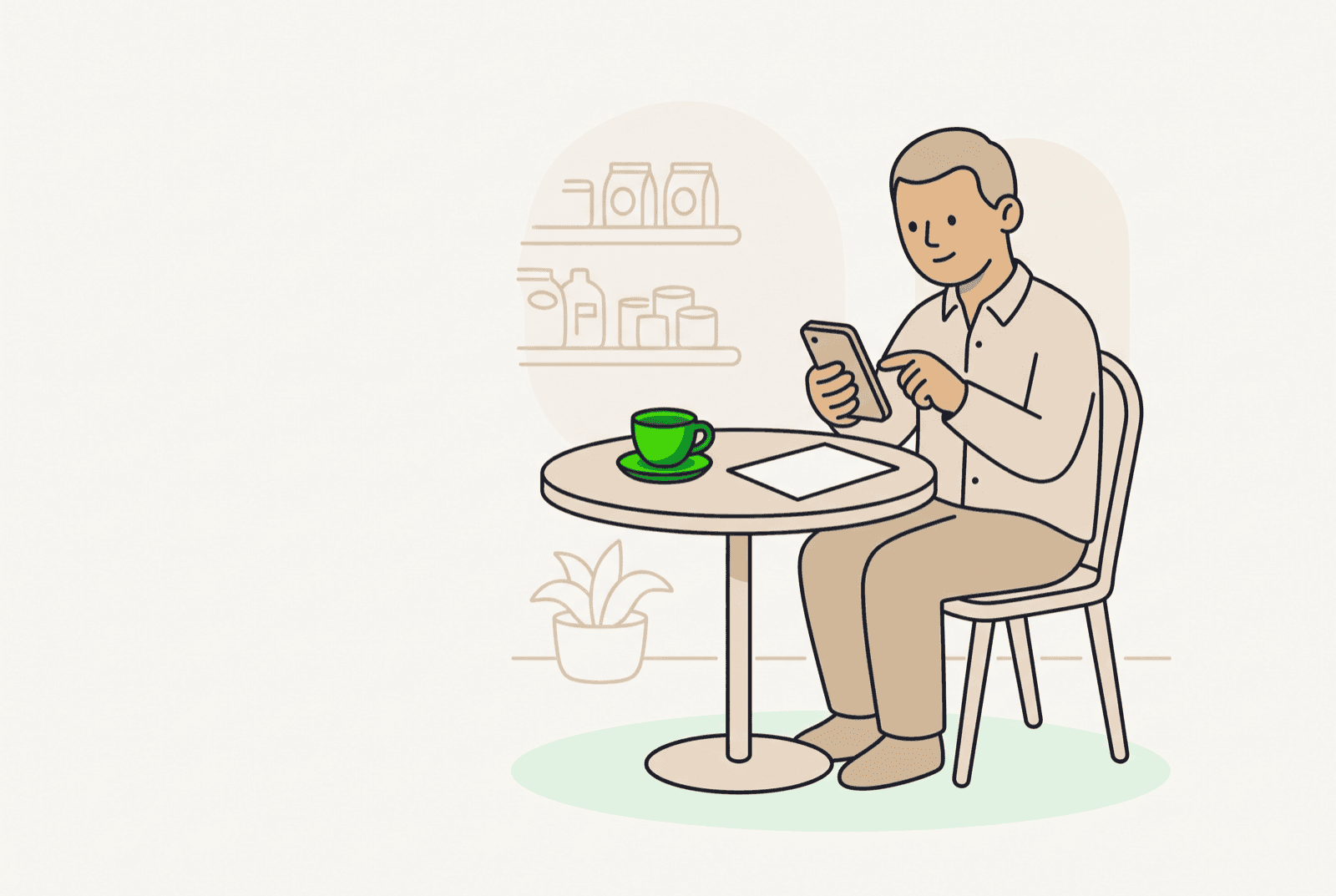
The self-audit
The owner opens the app, tells it what kind of business they run and roughly how big it is. From there they walk their premises answering plain-language questions — Does the entrance have a step? How wide is the accessible restroom door? Is accessibility signage present at the entrance? — and photograph each item through the app. The photos attach to the evidence appendix automatically.
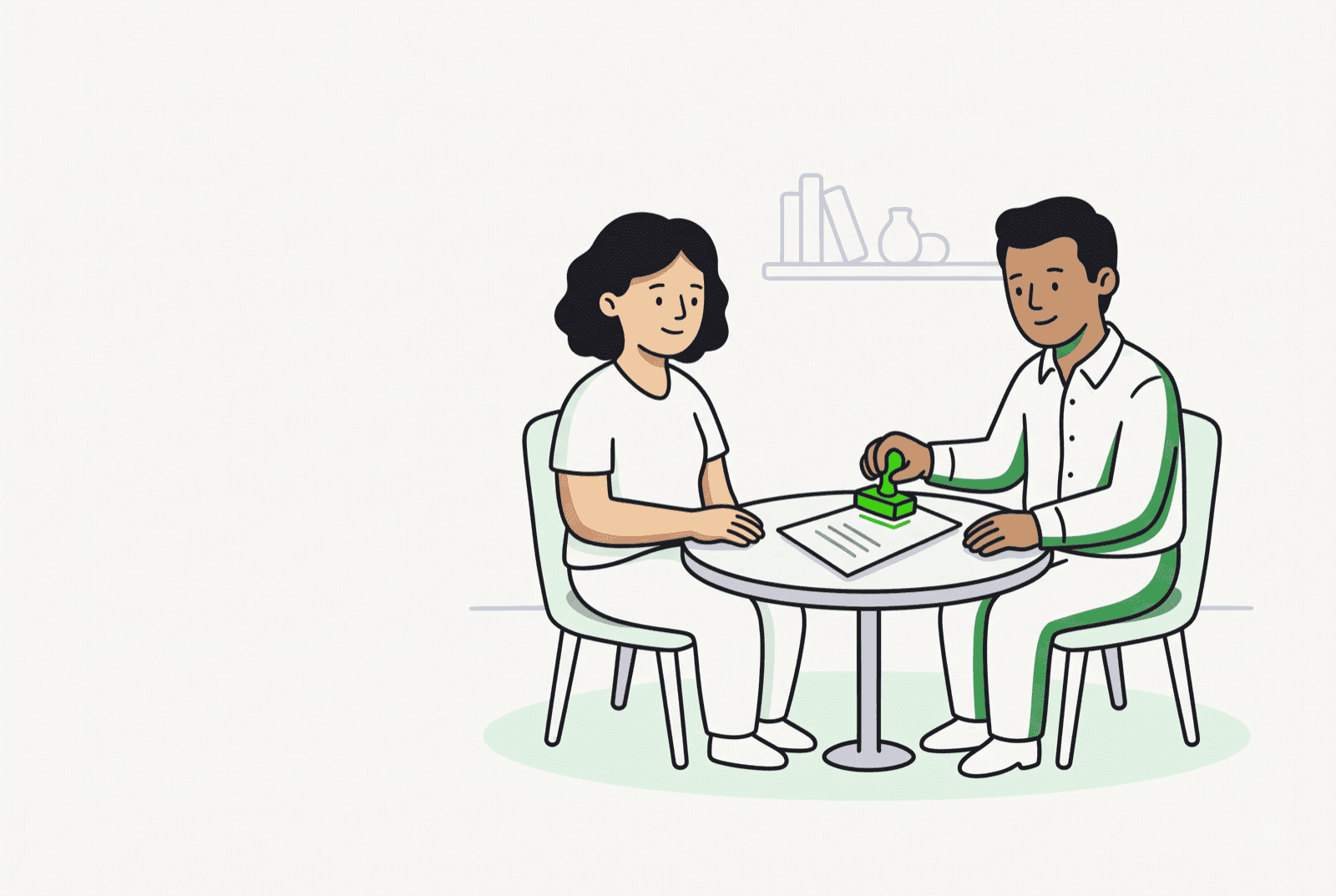
The clean case: a filled-out declaration
When every answer is compliant, the app produces a pre-filled declaration in the exact format the licensing office expects, with the photographic appendix stapled underneath. The last human touch is a lawyer identifying the owner and signing — we have arranged this with partner counsel so it happens end-to-end inside the app. The owner walks into the licensing office (or e-files) with a document the clerk already trusts, because it is structurally identical every time.
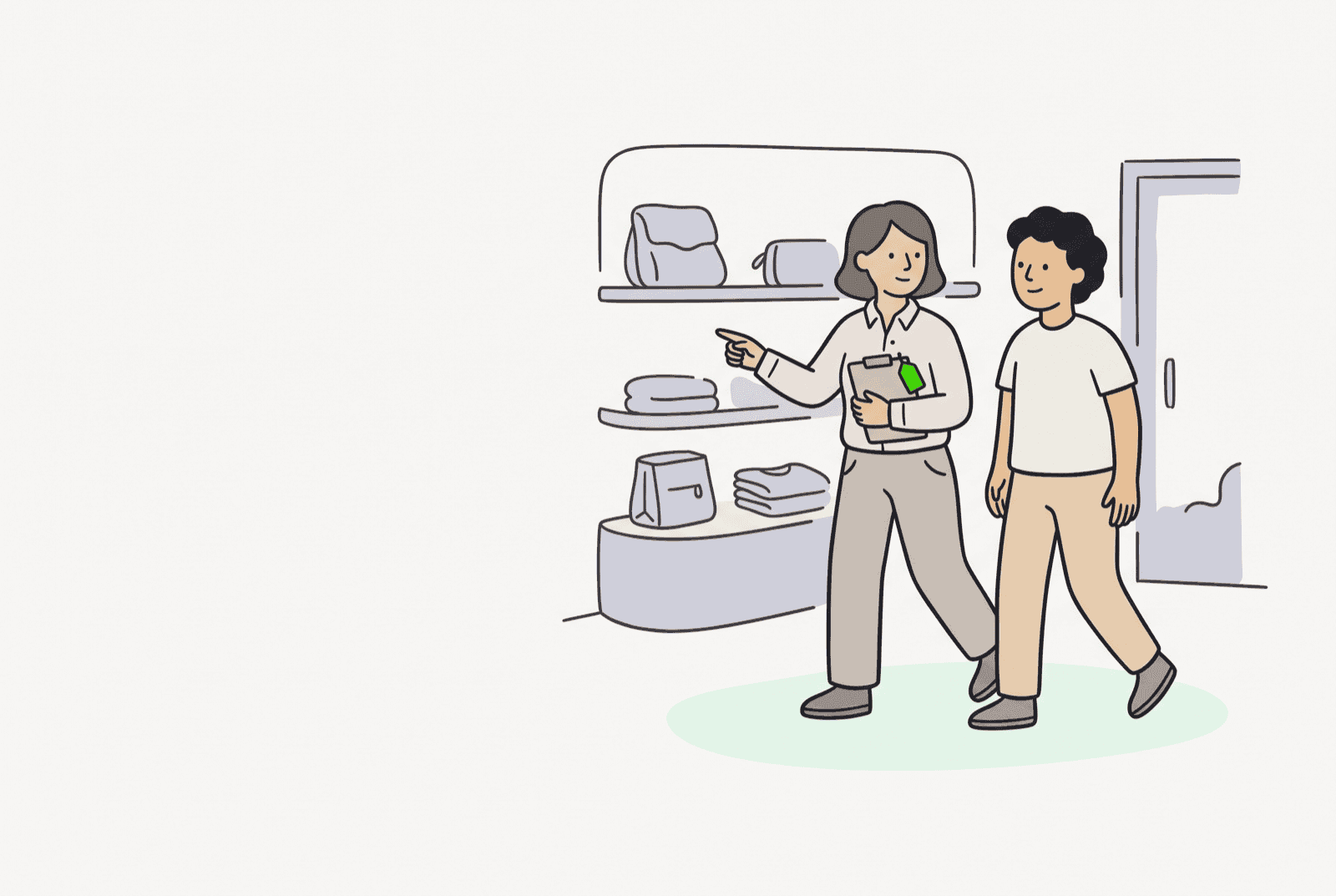
The hard case: gaps + a professional hand-off
When the audit surfaces a real gap — an accessible restroom below spec, missing signage, a door that will not open at ninety degrees — the app produces a structured remediation report instead of a declaration. Complex classifications (larger buildings, mixed-use, public-serving venues) route directly to a certified consultant from our office. The hand-off is designed, not accidental: the consultant receives the full self-audit, the photographs, and the identified gaps in a format they can act on in the first minute of the site visit.
Why we could build this
It matters who writes the questions in a compliance app. Not because compliance is complicated in the abstract — the regulations are public — but because compliance is complicated in the specific. Ninety per cent of the questions on a well-designed audit are the same across a bakery, a clinic, and a small hotel. Ten per cent are not. Knowing which ten per cent is what separates a useful app from a lawsuit.
Tamar Accessibility has run those audits, by hand, for close to twenty years. Our senior consultants have been on site at thousands of small businesses over that time. Every question in the app corresponds to something we have already asked in person, in front of a business owner who could ask us follow-up questions. Every branch in the questionnaire logic corresponds to a decision we have already made in the field.
That is not a moat a well-funded newcomer can close on paper. It is the raw material that lets us know when a plain-language question is unambiguous enough for a small-business owner to answer without help, and when it is not. The app is the codification of a working practice, not a first pass at the domain.
The specifics are local. The architecture is not.
We built this once, for our home market. The result is a stack that separates cleanly into three layers: a jurisdiction-neutral engine (question schema, tiered classification, evidence handling, PDF generation, hand-off to a licensed reviewer), a jurisdiction-specific rule set (the actual questions, the actual thresholds, the actual document format), and a set of local partnerships (in our case, counsel authorised to sign; in another jurisdiction, whatever the local equivalent is).
If you are looking at a similar bottleneck somewhere else — a compliance regime where a professional bottleneck sits between a small business and a municipal bureaucracy that cannot itself scale trust — the engine is portable. The rule set is not, and should not be; local law is local. What we know how to do is stand up the engine, sit with the local domain experts, and turn their practice into a rule set the engine can execute.
The interesting conversations here are with municipalities, licensing bodies, and civic-tech funders who see a version of this pattern in their own city. Not because we want to sell software; because we would rather solve this problem in three places than in one.
If there is a repeatable value proposition here, it is this: given a compliance process everyone tolerates and nobody trusts, we build the software that makes it work end-to-end. Accessibility is where we started. It does not have to be where we stop.
If you see the same pattern
If you are a municipality, a licensing body, a civic-tech funder, or a founder looking at a similar bottleneck in your own jurisdiction, we would like to talk. There is nothing to buy on this page and no waitlist to join. Write to us and we will set up a call to compare notes on your version of this problem.